

Written by Jill G. Thomas, Director of Technical Services
This academic year the Mudd Library welcomed five classes that engaged with our special collections: History of the Book, ENGL 527/HIST 385; Early Medieval Art and Architecture, ARTHI 210; Gothic and Northern Renaissance Art and Architecture, ARTHI 213, Intermediate Artist Books, ART 322; and Lincoln: Revolutionary American, HIST 472. Having students come and work within our collections usually yields students that are excited about books, reading, and cultural studies. Working in special collections is especially useful for students who are independent, hands-on, and sight oriented learners. Below are examples of course assignments designed specifically toward enhancing learning through special collections research.
History of the Book, ENGL 527/HIST 385
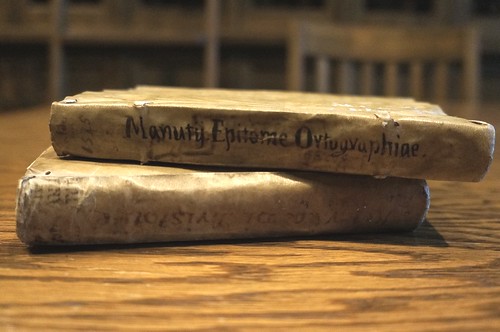
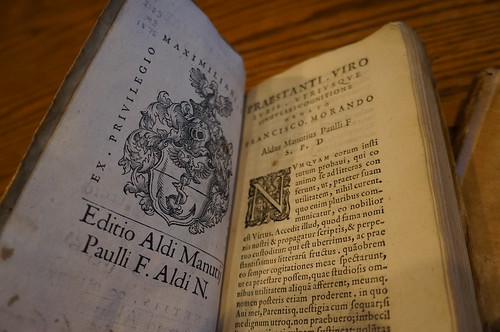
Professor Garth Bond teaches the History of the Book every two years. This year, he asks students to engage with primary resources in two assignments. The first was five bibliographic reports that offer a description, designed to give the student some experience with older books. The second assignment, their final project, was to design an exhibition using books from either the Milwaukee Downer or Civil War Collections
Assignment One: Bibliographic Reports and Study Groups
Assignment Two: Final Project Presentation
Early Medieval Art and Architecture, ARHI 210 Gothic and Northern Renaissance Art and Architecture, ARHI 213
These two classes, taught by Professor Alice Sullivan, looked at manuscript facsimiles in our Main and Milwaukee Downer Collections.
Assignment: After a short “show and tell” session with the librarian, choose one facsimile piece and write a short paper answering the following questions:
- What role does the facsimile play in manuscript studies?
- How should we approach the materiality of the physical facsimile? Should facsimiles be considered reconstructive, reproductive, and/or representative of the texts they emulate?
- To what extent can a physical facsimile be used in lieu of the original book or text? What are the limits of using a facsimile?
Intermediate Artist Books, ART 332
This is one of three classes that look at artist books taught by Professor Ben Rinehart. This second in the series of classes, has the student research book making techniques along with book construction as it relates to artist books as an expression of art. I met with the class in the Milwaukee Downer Room and went over a short history of the book plus, showed them examples of different kind of book structure and bindings represented in the collection. Their assignment was to present to the class a book discussing their research from a book in the Milwaukee Downer Collection.
Assignment: Rare Book Presentation
Lincoln: Revolutionary American, HIST 472
Our strong Civil War Collection is a standout in the region. The collection is especially strong in Lincolniana. In this class, Professor Jerald Podair looked at Lincoln as the first modern American, challenging his students to see him as a “revolutionary” and one who set the course for America to become a modern nation. The one written research assignment was different depending if the student is a History major or not.
Assignment for majors: Write a 10-15 page research paper on any aspect of Abraham Lincoln’s life, historical significance or legacy. Example paper topics: “Lincoln’s Road to the Emancipation Proclamation,” and “Lincoln’s Rhetoric of Inclusion.”
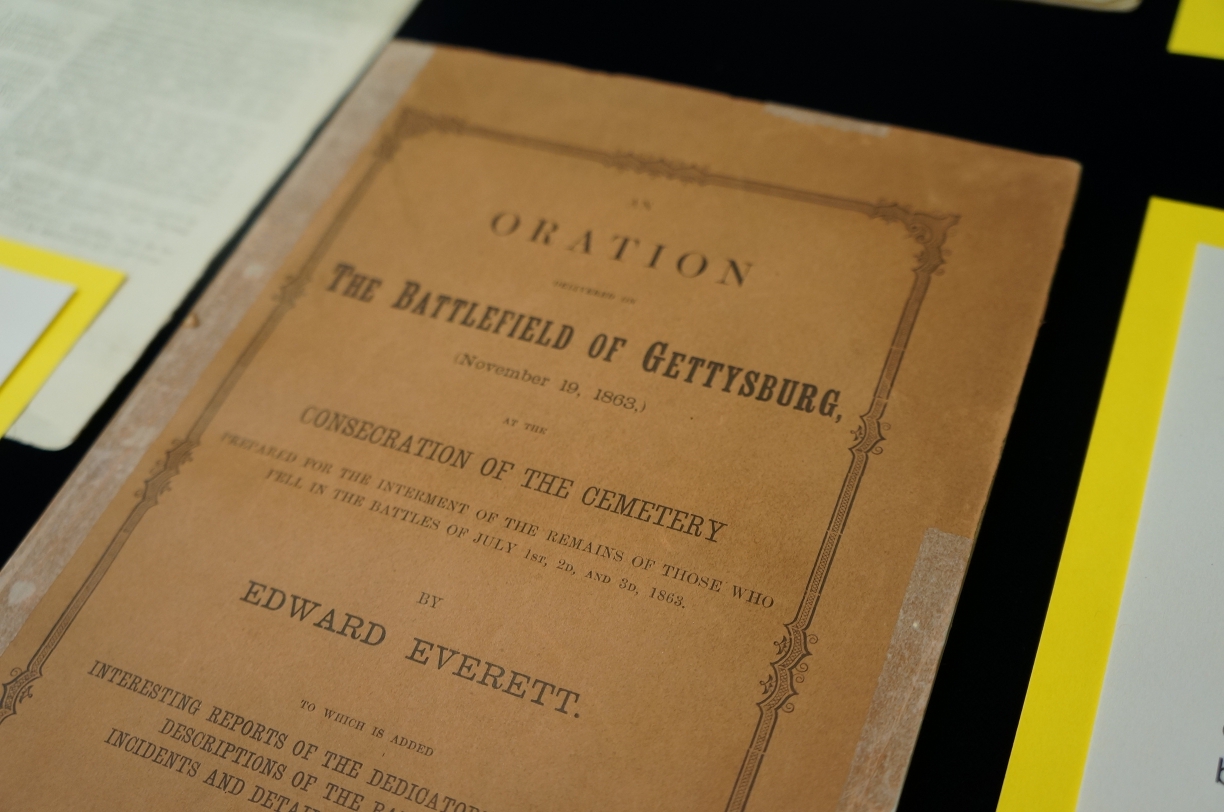
Assignment for non-majors: Write a 4-6 page book review on any aspect of Abraham Lincoln’s life, historical significance or legacy. Example books reviewed: Lincoln and his Admirals, Lincoln’s greatest speech, Lincoln at Gettysburg, Lincoln unbound, and Lincoln’s melancholy.
Teach with us! We are happy to support students through assignments which requires engagement with our collections. Bring your class in for an hour or several in-depth visits to investigate our rare book collections. Please contact us if you would like to learn more.
Recent Comments