
English

Tag: English

Your Language Degree: Passport to entry-level jobs and a Career

You’ve made the decision to study a language!  Whether it’s English, German, French, Spanish, Chinese, Japanese, or Russian, you are on your way to developing valuable skills like strong communication, cultural understanding, and critical thinking. While it might not seem obvious, many entry-level jobs right out of college want those exact skills, even if they don’t seem like “language jobs.”

Here are some great entry-level roles that require little to no experience beyond your college degree, where your language skills can give you a big advantage!

Jobs Where Language is a Major Asset

These roles often specifically look for people who can speak and understand a second language.

Bilingual Customer Service Representative

  • What you do: You help customers with their questions or problems over the phone, email, or chat, using your second language (like Spanish, Chinese, or Russian) for customers who don’t speak English well.

Why you fit

  • Companies with international clients need you to be the friendly voice that can understand and solve issues for everyone.

Experience to get in college

  • Look for on-campus jobs or part-time work in call centers, retail, or hospitality where you can use your language skills to help people.


Translator or Transcriber

  • What you do: You convert written text (like documents, websites, or articles) from one language to another, making sure the meaning and tone are just right. A transcriber converts audio into written text.

Why you fit

  • You’ve spent years perfecting your understanding of two languages and their cultures.

Experience to get in college

  • Offer to translate or transcribe for professors, student organizations, or local non-profits. Consider using freelance websites to take on small translation gigs.

Foreign Language Teacher/Tutor

What you do

  • You teach your major language (like French or Japanese) to students in a school or through private lessons.

Why you fit

  • Your passion for the language and deep knowledge of grammar and culture make you a natural teacher.

Experience to get in college

  • Volunteer as a tutor at a campus resource center, or lead informal language practice groups.

Jobs That Need Strong Writing and Communication

These roles value the excellent communication, writing, and research skills you developed while studying literature and language. Your foreign language degree is a bonus that can set you apart!

Content Writer / Copywriter

What you do

  • You create written material (called “content” or “copy”) for a company, such as blog posts, website text, social media updates, or advertisements.

Why you fit

  • Your language major taught you how to write clearly, persuade people, and match your writing style to any audience.

Experience to get in college

  • Write for the school newspaper, campus magazine, or a club’s newsletter. Start a personal blog or create content for a local business’s social media.

Editorial or Publishing Assistant

What you do

  • You support a book or magazine editor by reading manuscripts, checking facts, proofreading, and organizing projects.

Why you fit

  • You have a keen eye for detail, grammar, and structure—skills essential for quality writing and publishing.

Experience to get in college

  • Work for the school newspaper. Get an internship at a publishing company.

Marketing or Communications Assistant

What you do

  • You help manage how a company talks to the public and its customers. This could include drafting press releases, helping with email campaigns, or updating company social media.

Why you fit

  • Your understanding of how language works, plus your ability to think about different cultures, is perfect for connecting with diverse markets.

Experience to get in college

  • Get an internship in a company’s marketing or public relations department, or manage communications for a large student organization.

The Skills That Matters Most

Remember, your degree is more than just a piece of paper. You’ve proven you can:

1) Analyze and Interpret: Break down complex texts, ideas, or spoken words.

2) Communicate Effectively: Write and speak clearly to different people.

3) Adapt and Learn: Pick up new concepts (or languages!) quickly.

These transferable skills are what employers truly want!

Sports Journalism

If you’re a fan of sports, you might be found glued to your television set every weekend, watching racecars turn left for three hours, or millionaires throwing, hitting or carrying some kind of ball around.  While very few of us will end up as professional athletes, there are career opportunities for those who love sports, are excellent writers and communicators and, in some cases, have a great on-camera or behind the microphone presence.

Whether sitting behind a computer, standing on the field or talking in a broadcast booth, there are jobs in sports journalism.  If you’re a fan of sports and want to get involved in the world without getting too dirty or too injured, sports journalism is the field for you!

The best things about being a sports journalist is meeting your athletic heroes and the opportunity to travel. There is also a good deal of flexibility in your schedule, however you will have to adhere to the professional sports schedule you are covering, which likely means some weekend work.  The industry is also an easy one to explain to family that comes over for Thanksgiving, asking what you’re doing with that degree.

No matter where you live, there is likely a news organization nearby that covers sports. Here in Appleton, the Appleton Post Crescent newspaper and website devote a great deal of coverage to the Green Bay Packers, especially on Mondays. Local Appleton and Green Bay radio and TV stations also dedicate many resources to the coverage of local and statewide sports. Due to media consolidation, there are not as many listed job opportunities as there used to be. For example. Gannett, the largest newspaper publisher in the United States, owns and prints most of the local papers in this area including the aforementioned Post Crescent, the Green Bay Press Gazette, the Oshkosh Northwestern, and the Fond du Lac Reporter.  So rather than applying at a single paper, you would instead apply with Gannett.

Sports journalists usually get their start right out of college as a general reporter, who covers more than just sports. With time and excellent job performance, journalists begin to specialist in certain areas, like sports. A bachelor’s degree in communications, journalism or English is often a requirement to get started. Experience, such as writing for The Lawrentian is also extremely helpful.

As is the case with several industries, the future of sports journalism involves analytics. As there is data collected about every instance in every sport, sports data analysis has increased. Sports publications are now hiring people with extensive background in statistics and mathematics to publish articles detailing this analysis. New metrics are used to compile rankings of players and teams. Blog sites like FiveThirtyEight and other full-time sport analytic sites take available data and construct analytic heavy articles about sports.

In terms of career stability, as long as there are sports, there will be sports journalists who love what they do! If you’d like to learn more, schedule a visit with the Career Center to discuss it further!

https://mwwire.com/2022/09/08/5-reasons-to-become-a-sports-journalist/

https://en.wikipedia.org/wiki/Sports_journalism

https://www.indeed.com/career-advice/career-development/how-to-become-a-sportswriter

https://www.butler.edu/wp-content/uploads/sites/8/2022/01/sports_journalism_industry_guide_1.pdf

https://www.indeed.com/jobs?q=Sports+Journalism&start=10&pp=gQAPAAABhzNvVjoAAAAB_uVHJAAaAQEBBgHXiQQkOKrzY-qqH6si295itUjSaJwAAA&vjk=e638d7dec679aadd

https://lawrence.joinhandshake.com/stu/appointments/new
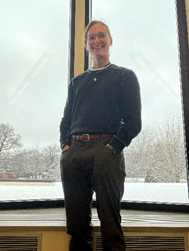
Spencer Brown

Spencer R. Brown is a sophomore experiencing their first year at Lawrence University, with a major in Government. They work as a media and marketing assistant in the Career Center, and curates articles for students in both Communication, Journalism & Written Arts (#CJW) and Government, Law & International Relations (#GLI) career communities. A writer and animator by trade, Spencer is fascinated in finding ways to make digesting information entertaining. Feel free to connect with them on LinkedIn here!