
Posts Tagged ‘human rights’

Social Justice Issues Examined in Student Film Festival

Thursday, March 22nd, 2012

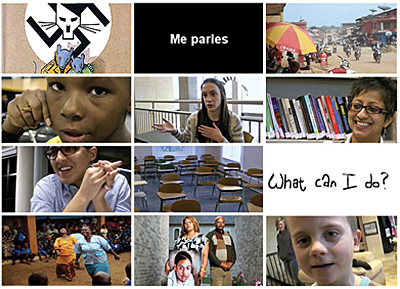
Issues ranging from homelessness to racial diversity will be explored in a series of short, student-produced films in Lawrence University’s first Human Rights Student Film Festival Wednesday, March 28 from 5-7 p.m. in the Warch Campus Center cinema. The festival is free and open to the public.

The films are the culminating assignment of the English department class “Literature and Human Rights,” in which each student researched a human rights or social justice topic of individual interest and then produced a short film that either advocated or analyzed that topic. Seven of the 17 films created for the class will be screened for the festival. Each film is between four and five and one-half minutes in length.

Lena Khor, assistant professor of English, team-taught the course with artist-in-residence and award-winning documentary filmmaker Catherine Tatge.

The goal of the project, according to Khor, was three-fold:  invite students to experience first-hand the aesthetic and ethical dilemmas of representing human rights and their violations; provide opportunities to creatively tell a story or make an argument in a multimedia format; and encourage engagement with various communities — Lawrence, Appleton and beyond.

“The students produced some wonderful films on important topics,” said Khor. “They  impressed me with the passion, thought and energy with which they approached this project. Considering most of them had never made a film before, they all should really be proud of their accomplishments.

“This film festival is not just a way to showcase the excellent work the students have done in this class,” Khor added. “It’s also intended to generate discussion on and off campus about social justice issues that are relevant to our everyday lives here and elsewhere.”

Lawrence’s video editor Anna Johnson Ryndova served as a technical consultant to the students on the project.

The festival films scheduled to be shown and their student producers are:

“People in Need, Changing the Face of Homeless (Austin Rohaly ’15). This film attempts to change the way in which people in need are stereotyped and offer help to organizations in need of volunteers within the Appleton area.

 “FacebΘΘk” (Fanny Lau ’14).  An exploration of Facebook’s violation of privacy and how users can protect themselves.

  “There and Back Again” (Matthew Lowe ’14). An examination of the human rights violations that occur as a result of a globalized economic system that seeks to minimize costs and maximize profits. As consumers, however, we have the power to vote with our money and our voice to make effective change.

“Speak to Me” (Conor Beaulieu ’15). ‪A look into America’s crippling lack of language diversity.

“‪Ethical Considerations in Art Spiegelman’s ‘Maus’” (Sam Neufeld ’15). An exploration of the ethical issues associated with Art Spiegelman’s decision to portray the Holocaust in a comic book format and the importance of form in human rights literature.

 “Let’s Talk About Race” (Tammy Tran ’14). Racial diversity on the Lawrence campus is examined while addressing the need to recognize, appreciate, and celebrate differences in the student body on a deeper level.

“Human Rights: The Next Big Thing? (Heather Carr ‘15). This film examines the fad-like quality of human rights advocacy through the lens of the organization Invisible Children.

About Lawrence University
Founded in 1847, Lawrence University uniquely integrates a college of liberal arts and sciences with a world-class conservatory of music, both devoted exclusively to undergraduate education. Ranked among America’s best colleges by Forbes, it was selected for inclusion in the book “Colleges That Change Lives: 40 Schools That Will Change the Way You Think About College.” Individualized learning, the development of multiple interests and community engagement are central to the Lawrence experience. Lawrence draws its 1,445 students from 44 states and 35 countries.  Follow us on Facebook.

“Blood Diamonds” Author Discusses Progress in Sierra Leone in Human Rights Series Address

Friday, October 28th, 2011

Award-winning journalist and author Greg Campbell, whose book “Blood Diamonds: Tracing the Deadly Path of the World’s Most Precious Stones,” inspired the 2006 Oscar-nominated, Leonardo DiCaprio film “Blood Diamond,” delivers the final lecture in Lawrence University’s month-long series “Engaging Human Rights.”

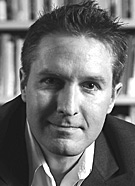
Greg Campbell

Campbell presents “Lessons Learned from Conflict Diamonds in Sierra Leone, or Opportunities Missed?” Tuesday, Nov. 1 at 7 p.m. in the Wriston Art Center auditorium. Campbell’s visit is sponsored by the the Mojmir Povolny Lectureship in International Studies. Named in honor of long-time Lawrence government professor Mojmir Povolny, the lectureship promotes interest and discussion on issues of moral significance and ethical dimensions.

Based on his recent return visit to Sierra Leone, Campbell will assess the country’s progress 10 years after the end of a brutal civil war waged for control of its vast diamond reserves, including whether diamonds are a blessing or remain a national curse.

Campbell has written for The Atlantic, The Economist, Christian Science Monitor and the San Francisco Chronicle, among others.  In addition to “Blood Diamonds,” he is the author of “The Road to Kosovo: A Balkan Diary,” and “Flawless: Inside the World’s Largest Diamond Heist. His latest book, “Pot of Gold,” which examines  the exploding medical marijuana industry, is forthcoming.

Founded in 1847, Lawrence University uniquely integrates a college of liberal arts and sciences with a world-class conservatory of music, both devoted exclusively to undergraduate education. Ranked among America’s best colleges, it was selected for inclusion in the book “Colleges That Change Lives: 40 Schools That Will Change the Way You Think About College.” Individualized learning, the development of multiple interests and community engagement are central to the Lawrence experience. Lawrence draws its 1,445 students from 44 states and 35 countries.

NYC Filmmakers Discuss Their Documentaries as Part of “Engaging Human Rights” Series

Friday, October 21st, 2011

New York filmmakers Pamela Yates and Paco de Onis will be on campus to discuss two of their documentaries being shown as part of Lawrence University’s month-long series “Engaging Human Rights.

On Monday, Oct. 24, following a 7 p.m. screening of the 2011 film “Granito: How to Nail a Dictator,” Yates, the film’s director and de Onis, its producer, will conduct a question-and-answer session in the Warch Campus cinema.  The pair also will discuss “The Reckoning: The Battle for the International Criminal Court” on Tuesday, Oct. 25 after it is shown at 7 p.m.

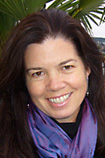
Pamela Yates

Yates is a co-founder of Skylight Pictures, a company dedicated to creating films and digital media tools that advance awareness of human rights and the quest for justice. Four of the films more than dozen films she has directed have been nominated for the Grand Jury Prize at the Sundance Film Festival.

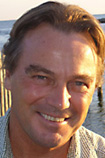
Paco de Onis

Paco, a partner at Skylight Pictures, previously produced documentaries for PBS and National Geographic. His eclectic background includes creating music festivals in South America and the Caribbean, renovating and operating an arts/performance theater in Miami Beach and owning a Spanish-style tapas tavern in a 500-year old colonial house in Cartagena, Colombia.

Granito,” part political thriller, part memoir follows a 40-year search for details that can be used to hold accountable those responsible for the genocide of more than 200,000 people at the hands of Guatemalan military and paramilitary soldiers. It received the “Best Creative Documentary Award” at this year’s Paris International Film Festival.

The Reckoning” explores the new International Criminal Court’s struggle to prosecute perpetrators of crimes against humanity, including Sudan President Omar al-Bashir and Lord’s Resistance Army leaders in Uganda.  Recognized with Emmy Award nominations for Best Documentary and Outstanding Investigative Journalism, “The Reckoning” was named Best Documentary at the 2009 Politics on Film Festival in Washington, D.C.

Founded in 1847, Lawrence University uniquely integrates a college of liberal arts and sciences with a world-class conservatory of music, both devoted exclusively to undergraduate education. Ranked among America’s best colleges, it was selected for inclusion in the book “Colleges That Change Lives: 40 Schools That Will Change the Way You Think About College.” Individualized learning, the development of multiple interests and community engagement are central to the Lawrence experience. Lawrence draws its 1,445 students from 44 states and 56 countries.

Latin America Expert Examines Influence of Churches in Human Rights Series Presentation

Friday, October 7th, 2011

The emergence of human rights as an influencing factor in international relations and the role Latin America played in that process will be examined in the second installment of Lawrence University’s month-long series “Engaging Human Rights.”

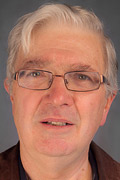
Alexander Wilde '62

Alexander Wilde, a 1962 Lawrence graduate and a senior scholar at the Woodrow Wilson International Center for Scholars in Washington, D.C., presents “The Churches and Human Rights in Latin America” Tuesday, Oct. 11 at 7 p.m. in the Wriston Art Center auditorium. The event is free and open to the public.

Although human rights are founded in international law, Wilde will discuss how Christian beliefs and institutions contributed significantly to social movements that made the cause of human rights effective and how understanding why Latin American Christians were moved to action hold insights for engaging human rights today.

Wilde is spending the fall term as Lawrence’s distinguished visiting Scarff professor. During his career, he has directed the Washington Office on Latin America, an NGO concerned with human rights and U.S. foreign policy, and was an officer of the Ford Foundation. In the mid-1990s, he led the Ford Foundation’s regional office in Santiago, Chile, developing new programming in human rights and historical memory.

In addition to his position at the Woodrow Wilson International Center for Scholars, Wilde serves on advisory boards at the Social Science Research Council, Chilean Millennium Science Initiative and the Latin American Program of the Woodrow Wilson Center.

In recent years he has advised Argentine human rights organizations and award-winning documentary films, including “State of Fear” (2005) on the work of the Peruvian Truth Commission, “The Judge and the General” (2008) on efforts to prosecute Pinochet, “The Reckoning” (2009) on the International Criminal Court, and “Granito” (2011) on the Guatemalan genocide.  He lived and worked in Chile for more than a decade during its long post-1990 transition to democracy.

Founded in 1847, Lawrence University uniquely integrates a college of liberal arts and sciences with a world-class conservatory of music, both devoted exclusively to undergraduate education. Ranked among America’s best colleges, it was selected for inclusion in the book “Colleges That Change Lives: 40 Schools That Will Change the Way You Think About College.” Individualized learning, the development of multiple interests and community engagement are central to the Lawrence experience. Lawrence draws its 1,520 students from 44 states and 56 countries.

Writer Rebecca Solnit Discusses “Hope, Disaster and Utopia” in Lawrence University Convocation

Friday, April 16th, 2010

In collaboration with Green Roots’ Earth Week celebration, award-winning author and cultural historian Rebecca Solnit presents “Swimming Upstream in History: Hope, Disaster, Utopia” April 20 at 11:10 a.m. as part of Lawrence University’s 2009-10 convocation series.

Solnit’s address in the Lawrence Memorial Chapel, 520 E. College Ave., will be followed by a question-and-answer session at 2 p.m. in the Warch Campus Center cinema. Both events are free and open to the public.

Rebecca-Solnit_web

Rebecca Solnit

An activist for ecological and human rights issues, Solnit is the author of 12 books, among them “Hope in the Dark: Untold Histories, Wild Possibilities,” “Wanderlust: A History of Walking” and 2004’s “River of Shadows: Eadweard Muybridge and the Technological Wild West,” a historical tour de force that has been hailed as one of the best books of the past decade.

In her most recent book, 2009’s “A Paradise Built in Hell: The Extraordinary Communities that Arise in Disaster,” Solnit offers an investigation of human emotion in the face of catastrophe. She explore the common citizen responses of empathy, spontaneous altruism and mutual aid, which turn out to be more typical than the conventional perception of violence and selfishness, in the face of such disasters as the 1906 San Francisco earthquake, the 9/11 terrorist attacks and Hurricane Katrina.

A contributing editor at Orion Magazine, the San Francisco-based Solnit has been recognized with two National Book Critics Circle Awards and the Lannan Literary Award for Nonfiction. She has been awarded grants from the Guggenheim Foundation and the National Endowment for the Arts.

Solnit serves as contributing editor to Harper’s magazine and writes for the “London Review of Books” and the political website Tomdispatch.com.

Relationship of Human Rights and Literature Examined in Lawrence Main Hall Forum

Monday, February 8th, 2010

The relationship between literature and human rights will be examined Monday, Feb. 8 in the Lawrence University Main Hall Forum “War Crimes and Representation.” The presentation, at 4:30 p.m. in Main Hall 201, is free and open to the public.

James Dawes, associate professor of English and American literature at Macalester College, discusses his work with Japanese war criminals, who participated in the 1937-38 rape of Nanking, China, in which invading Japanese troops slaughtered more than 369,000 Chinese civilians and prisoners of war and raped an estimated 80,000 women and girls.

Dawes interviewed the war criminals, who offered their confessions both as a warning and a desire to spread them in the western world before they die. His presentation will explore the importance of the confessions as part of the collective moral archive of the 20th century to create an accurate account of our time for future generations as well as how these confessions represent an impossibility in language.

The founder and director of the Program in Human Rights and Humanitarianism at Macalester, Dawes is the author of “The Language of War,” which examines the relationship between language and violence and “That the World May Know: Bearing Witness to Atrocity,” a finalist in the 2008 Independent Publisher Book Awards, which chronicles the successes and failures of the modern human rights movement.